
A small garden for your cycle.
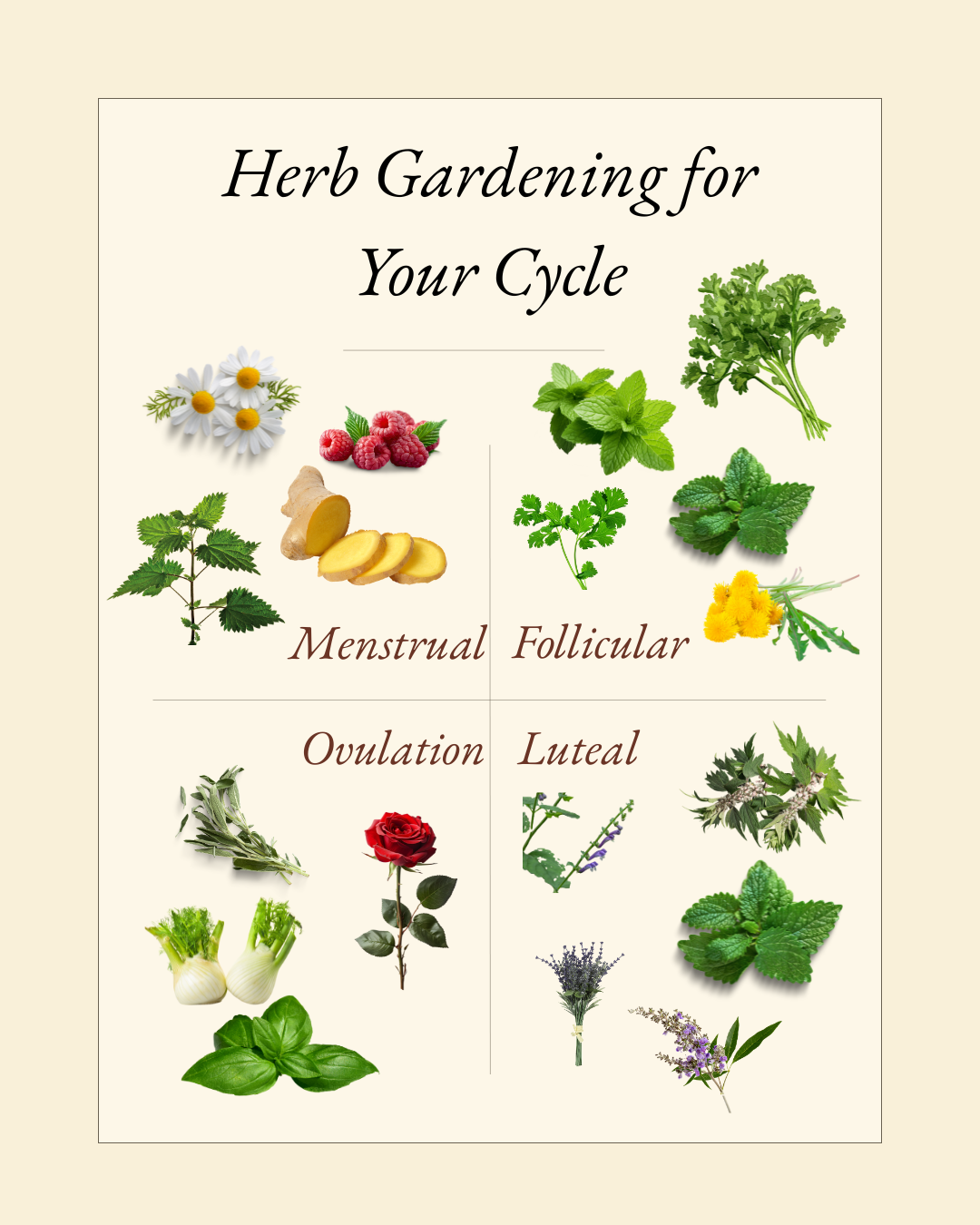
Dear Friend,
Spring is a time for renewal as well as planting your garden. Your garden can nourish you with fruits, vegetables and herbs. You should choose what to garden based on what sunlight, climate, your skills, your time, what you will eat and what will be good for you to eat. There are herbs that help to support your hormones and body through your cycle phases.
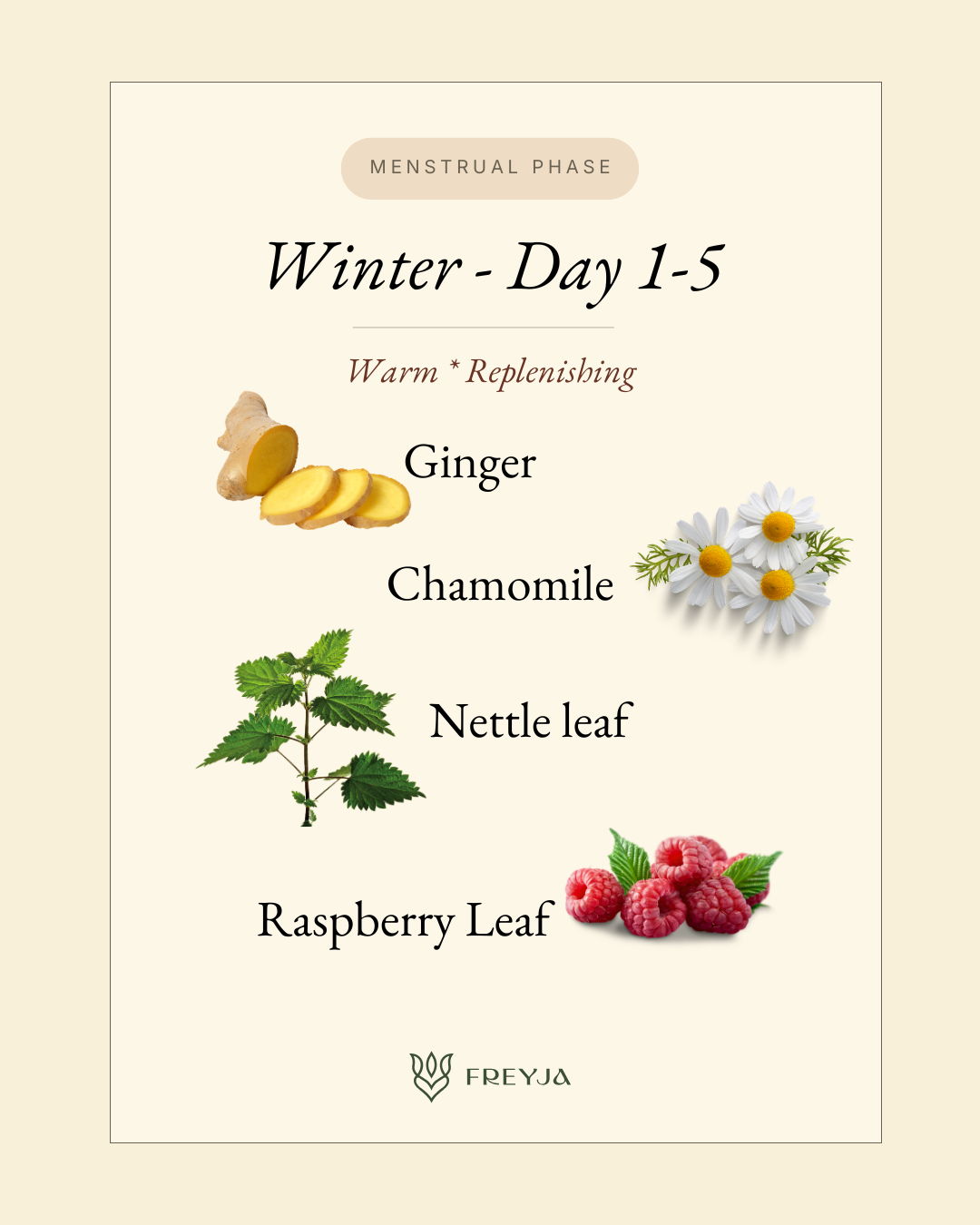
Winter — the bleeding week
The herbs I want most during a bleed are the warm, slow ones. The kind you would steep while sitting under something heavy.
Ginger first, if you can manage it. It needs warmth, so a pot indoors is usually the answer unless you live somewhere generous. Fresh, in hot water, with a little honey — it eases the dull seize of cramps better than anything I've found that grows.
Chamomile is the one I keep recommending to people who say they don't have a green thumb. It self-sows once it's settled, and the little daisy flowers can be picked and dried through the summer for tea through the winter of the cycle. Gentle, anti-inflammatory, and it pairs naturally with the kind of sleep the body wants on days one and two.
Nettle, for the iron. The body has just lost iron and the leaf returns some of it. A word of warning — nettle spreads. Keep it in a contained bed or a deep pot, or it will become the whole garden. Wear gloves until it dries.
Raspberry leaf, taken as a tea through the bleeding week, has been the traditional uterine tonic for as long as anyone has been writing these things down. The canes give you fruit in summer, which is its own quiet bonus.
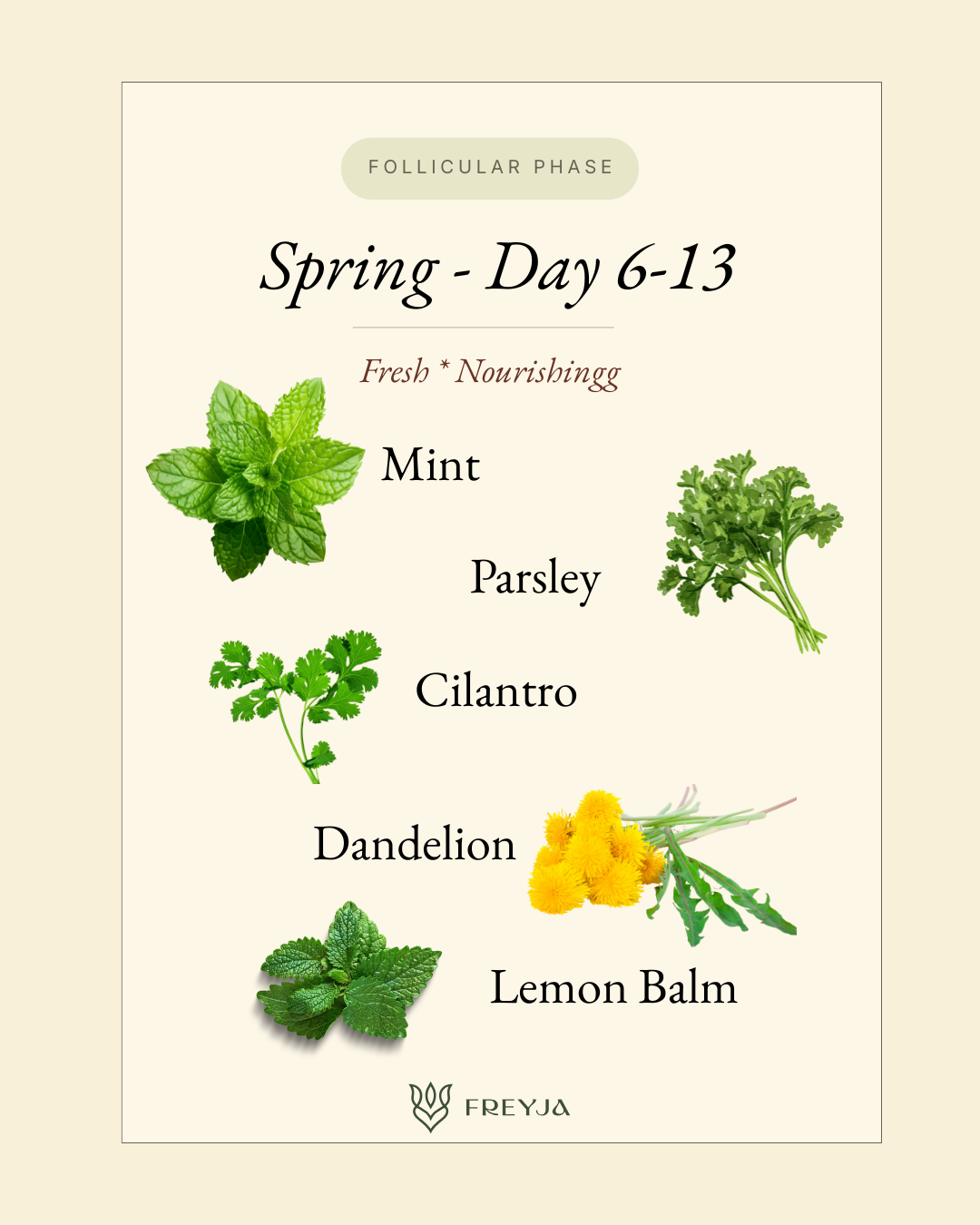
Spring — the follicular rise
After the bleed ends, estrogen begins rising again and the body wakes. The herbs that suit this phase are the bright, green, quick-growing ones — they match the lightness the body is reaching for.
Mint, of every kind. Peppermint, spearmint, chocolate mint if you can find it. It is the easiest of all of these to grow, and the one warning I'll repeat: keep it in pots. It will take over the bed, and then the bed next to it, and so on.
Parsley is more than garnish. It quietly supports estrogen metabolism through the liver, and it grows readily from seed in cool spring weather. Chop it into everything during this week. Salads, eggs, grain bowls.
Cilantro bolts the moment it gets warm, so sow it in succession across the spring. I love it in this phase — it has the fresh, slightly soapy brightness that suits the follicular appetite for raw, light food.
Dandelion is the one you do not need to plant. It arrives. If you can let a corner of your garden go a little wild, you'll get the leaves, which are wonderfully bitter and liver-supportive, and the roots, which roast into a coffee-like tea later in the year.
Lemon balm is the soft, lemony cousin of mint. Gentle on the nerves. Useful in any phase, particularly bright in this rising one.
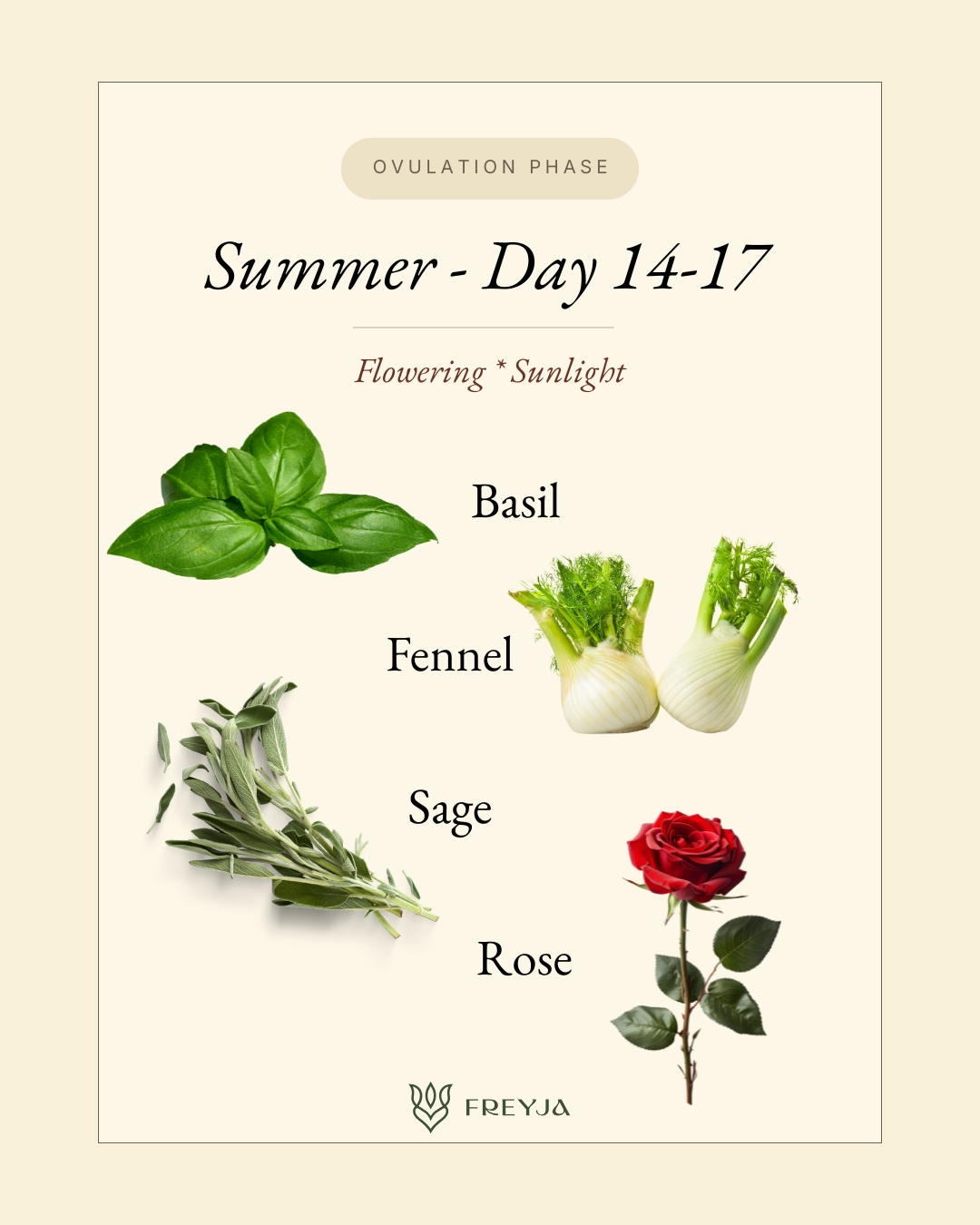
Summer — the ovulatory days
Estrogen peaks. The body is at its most outward, its most social, its most luminous. The herbs of this phase are the flowering, sunlit ones.
Basil is the centerpiece — sweet, Thai, lemon, holy. If you only plant one variety, plant holy basil, also called tulsi. It is an adaptogenic herb that has long been used to soften stress and lift mood, and it tastes nothing like the basil you put on tomatoes — clovey, almost peppery, very alive.
Fennel becomes a tall, feathery, beautiful plant if you let it. Seeds, leaves, bulbs, all useful. It has a long traditional reputation for supporting the body through this brighter half of the cycle.
Sage is woody and grounding and slightly antimicrobial. A small bush will give you leaves for years with almost no effort. It is also one of those plants that anchors a garden visually — a quiet grey-green presence near the door.
Rose asks for more space, but a single shrub gives you both petals, for tea and syrup and the bath, and hips full of vitamin C in late autumn. One thing to know: choose unsprayed varieties. The rose at the average garden centre is sprayed heavily and is not the rose you want to drink.
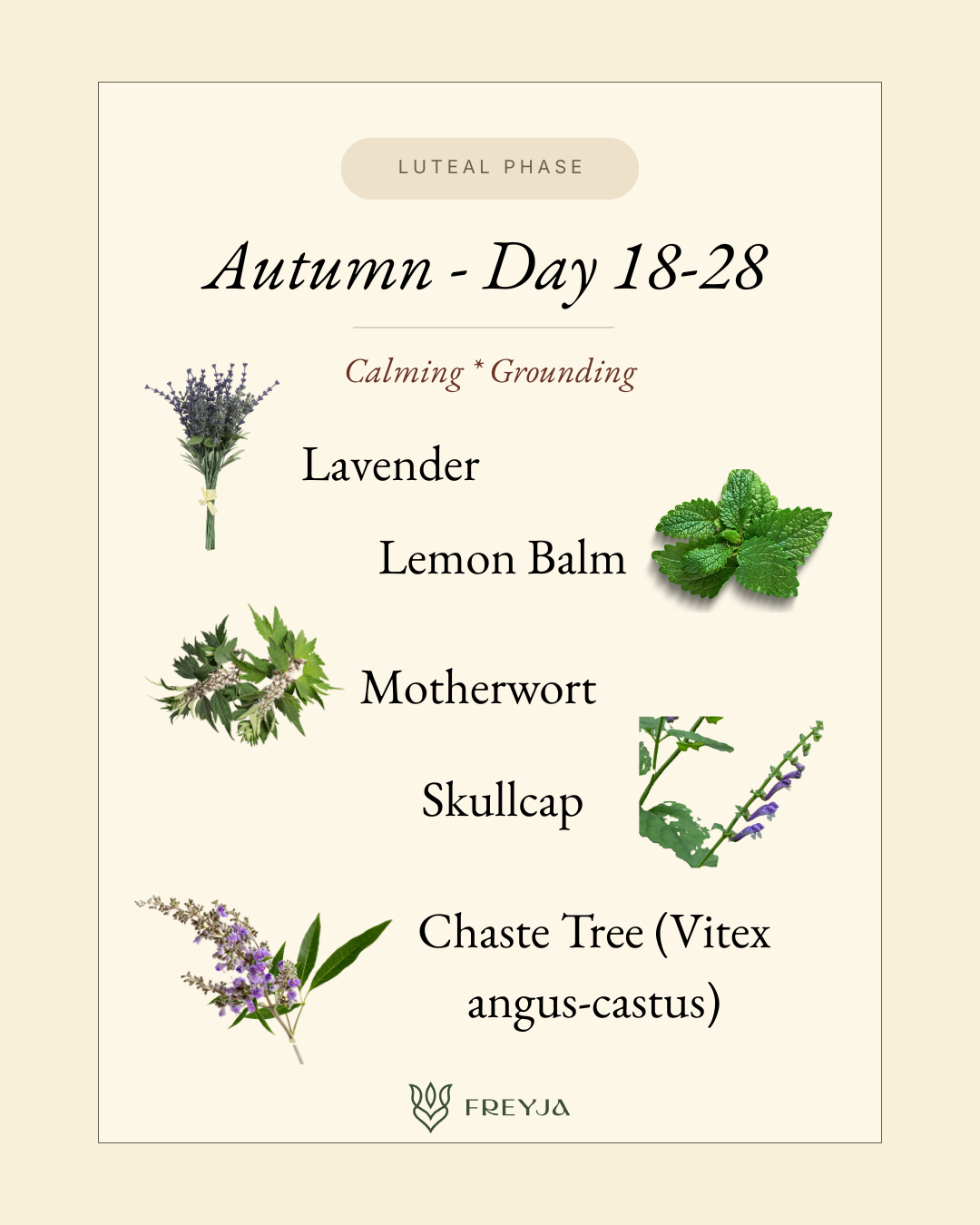
Autumn — the luteal stretch
The luteal phase is long. Twelve to fourteen days for many bodies, and progesterone is the dominant note. The body grows more sensitive, more inward, more attentive to comfort. The herbs of this phase are the calming, grounding ones, and honestly, this is where the garden earns its keep.
Lavender is the obvious one, and the obvious is sometimes correct. Dried flowers, in tea or in a small sachet by the pillow, calm the nervous system and support the kind of sleep that frays in the days before a bleed.
Lemon balm appears again, useful for the kind of low-grade irritability and bloating that can arrive in the second half of the luteal stretch.
Motherwort. The name is the credential. It is bitter and old, and has been used for centuries for the heart-racing, anxious, wound-up feeling that PMS sometimes brings. I usually mix it with something kinder, because on its own it is properly bitter.
Skullcap is a gentler nervous-system herb, useful for sleep and for the wound-up nights before a bleed.
And then there is chaste tree — Vitex agnus-castus. This is the most studied of all of them for premenstrual symptoms. It is a small shrub with lavender-coloured flowers, and the berries are the part traditionally used. Here is where I want to be careful with you: vitex genuinely shifts hormone signalling. It can interact with hormonal birth control, with fertility treatments, with some psychiatric medications. Please talk to a clinician before you make it a regular thing. I would feel terrible if you skipped that step.
If you only plant a few
Honestly, you do not need all of these. If you have a small windowsill or a few pots — chamomile, peppermint, holy basil, lavender. Those four alone will quietly cover all four phases without much fuss, and they are forgiving plants. Begin with what you already love to drink. The rest will come if you want them to.
These are a starting point, not the whole map. The fuller geography of what each phase asks for — in food, in herbs, in movement, in rest — lives in A Guide to Your Four Seasons.
Plant one or two this season. Notice which ones you reach for, and when. The cycle will tell you, over time, what it wants close to hand.
Take care,
Freyja
References
A few words about where what I know comes from. Some of these herbs sit on solid clinical ground — ginger, chamomile, fennel, lemon balm, and chaste tree all have placebo-controlled trials and systematic reviews behind their use for menstrual symptoms. Others — raspberry leaf, motherwort, dandelion, skullcap, rose, sage, parsley, cilantro — sit more in the territory of traditional use, with limited or early-stage modern research. I've noted which is which below, so you can weigh the evidence for yourself.
None of this is medical advice. Bodies are particular, and clinicians who know yours are the right people to consult before you change anything.
Ginger
Chen, C. X., Barrett, B., & Kwekkeboom, K. L. (2016). Efficacy of oral ginger (Zingiber officinale) for dysmenorrhea: A systematic review and meta-analysis. Evidence-Based Complementary and Alternative Medicine. Link
Daily, J. W., Zhang, X., Kim, D. S., & Park, S. (2015). Efficacy of ginger for alleviating the symptoms of primary dysmenorrhea: A systematic review and meta-analysis of randomized clinical trials. Pain Medicine, 16(12), 2243–2255. Link
Shirvani, M. A., et al. (2015). The effect of mefenamic acid and ginger on pain relief in primary dysmenorrhea: A randomized clinical trial. Archives of Gynecology and Obstetrics. Link
Chamomile
Khalesi, Z. B., Beiranvand, S. P., & Bokaie, M. (2019). Efficacy of chamomile in the treatment of premenstrual syndrome: A systematic review. Journal of Pharmacopuncture, 22(4), 204–209. Link
Niazi, A., & Moradi, M. (2021). The effect of chamomile on pain and menstrual bleeding in primary dysmenorrhea: A systematic review. International Journal of Community Based Nursing and Midwifery, 9(3). Link
Nettle
Rutto, L. K., Xu, Y., Ramirez, E., & Brandt, M. (2013). Mineral properties and dietary value of raw and processed stinging nettle (Urtica dioica L.). International Journal of Food Science. Link
Bhusal, K. K., Magar, S. K., Thapa, R., et al. (2022). Nutritional and pharmacological importance of stinging nettle (Urtica dioica L.): A review. Heliyon, 8(6). Link
Kregiel, D., Pawlikowska, E., & Antolak, H. (2022). Stinging nettle (Urtica dioica L.): Nutritional composition, bioactive compounds, and food functional properties. Molecules, 27(16), 5219. Link
Raspberry leaf
Bowman, R., Taylor, J., Muggleton, S., & Davis, D. (2021). Biophysical effects, safety and efficacy of raspberry leaf use in pregnancy: A systematic integrative review. BMC Complementary Medicine and Therapies, 21(1). Link
Note: this is the most rigorous review available. The authors concluded the evidence base remains under-developed; raspberry leaf has demonstrable effects on uterine smooth muscle in laboratory studies, but clinical evidence for the traditional uses remains limited.
Peppermint
Heshmati, A., et al. (2016). The effect of peppermint (Mentha piperita) capsules on the severity of primary dysmenorrhea. Journal of Herbal Medicine. Link
The effects of peppermint on menstrual disorders: A systematic review of randomized controlled trials. (2025). Iranian Journal of Nursing and Midwifery Research. Link
Dandelion
Herrera Vielma, F., Quiñones San Martin, M., Muñoz-Carrasco, N., et al. (2025). The role of dandelion (Taraxacum officinale) in liver health and hepatoprotective properties. Pharmaceuticals, 18(7), 990. Link
Note: most of the available evidence is preclinical, conducted in animal models. Traditional use for liver and bile support is long-standing, but human clinical trials remain limited.
Holy basil (tulsi)
Jamshidi, N., & Cohen, M. M. (2017). The clinical efficacy and safety of tulsi in humans: A systematic review of the literature. Evidence-Based Complementary and Alternative Medicine, 2017, 9217567. Link
A randomized, double-blind, placebo-controlled trial investigating the effects of an Ocimum tenuiflorum (Holy Basil) extract on stress, mood, and sleep in adults experiencing stress. (2022). Link
Parsley
Parsley's role in estrogen metabolism is supported by its apigenin and myristicin content, both studied as modulators of hepatic detoxification pathways. Direct clinical trials specifically on parsley for cycle support are limited; most use is traditional or based on broader flavonoid research.
Cilantro
Cilantro (coriander leaf) has clinical research on digestion and metabolic markers, but specific evidence for menstrual or cycle-related use is limited. Inclusion here is based on traditional use and its broader supportive role in the follicular-phase diet.
Fennel
Lee, H. W., Ang, L., Lee, M. S., et al. (2020). Fennel for primary dysmenorrhea: A systematic review and meta-analysis. Journal of Complementary and Integrative Medicine. Link
Salehi, A., Marzban, M., & Amini, F. (2019). Effect of Foeniculum vulgare on primary dysmenorrhea: A systematic review and meta-analysis. Women's Health Bulletin, 6(1), 1–8. Link
Pazoki, H., Bolouri, G., Farokhi, F., & Azerbayjani, M. A. (2016). Comparing the effects of aerobic exercise and Foeniculum vulgare on pre-menstrual syndrome. Middle East Fertility Society Journal, 21(1), 61–64. Link
Sage
Sage (Salvia officinalis) has clinical research primarily on menopausal hot flashes and on cognitive function, rather than on menstrual cycle support specifically. Its inclusion here draws on traditional use and on its broader nervine and antimicrobial reputation.
Rose
Rose petals and hips contain phenolic compounds and vitamin C with documented antioxidant activity. Specific clinical research on rose for menstrual cycle support is limited; inclusion here is based on traditional aromatic and nervine use.
Lavender
Donelli, D., Antonelli, M., Bellinazzi, C., et al. (2019). Effects of lavender on anxiety: A systematic review and meta-analysis. Phytomedicine, 65, 153099. Link
Lucena, L., Santos-Junior, J. G., Tufik, S., & Hachul, H. (2024). Effect of a lavender essential oil and sleep hygiene protocol on insomnia in postmenopausal women: A pilot randomized clinical trial. Explore, 20(1), 116–125. Link
Lillehei, A. S., & Halcón, L. L. (2014). A systematic review of the effect of inhaled essential oils on sleep. Journal of Alternative and Complementary Medicine, 20(6), 441–451. Link
Lemon balm
Mirghafourvand, M., Malakouti, J., Charandabi, S. M. A., Khalili, A. F., & Homayi, S. G. (2016). The efficacy of lemon balm (Melissa officinalis L.) alone and combined with lemon balm–Nepeta menthoides on premenstrual syndrome and quality of life among students: A randomized controlled trial. Journal of Herbal Medicine. Link
Ghazizadeh, J., Sadigh-Eteghad, S., Marx, W., et al. (2021). The effects of lemon balm (Melissa officinalis L.) on depression and anxiety in clinical trials: A systematic review and meta-analysis. Phytotherapy Research, 35(12), 6690–6705. Link
Motherwort
Bernatoniene, J., Kopustinskiene, D. M., Jakstas, V., et al. (2019). Leonurus cardiaca L. as a source of bioactive compounds: An update of the European Medicines Agency assessment report (2010). Evidence-Based Complementary and Alternative Medicine. Link
Note: traditional use for menstrual cramps, postpartum recovery, and heart-related anxiety is well-documented in European and Chinese herbal medicine. Modern clinical evidence is limited, with most pharmacological work coming from preclinical and in vitro studies. Motherwort is traditionally avoided in pregnancy.
Skullcap
American skullcap (Scutellaria lateriflora) has a small body of clinical research suggesting anxiolytic effects, with a controlled trial published in Alternative Therapies in Health and Medicine (Brock et al., 2014). Most of its use for sleep and premenstrual nervous-system support is traditional rather than clinically established.
Chaste tree (Vitex agnus-castus)
Schellenberg, R., Zimmermann, C., Drewe, J., et al. (2017). The treatment of premenstrual syndrome with preparations of Vitex agnus castus: A systematic review and meta-analysis. American Journal of Obstetrics and Gynecology. Link
Csupor, D., Lantos, T., Hegyi, P., et al. (2019). Vitex agnus-castus in premenstrual syndrome: A meta-analysis of double-blind randomised controlled trials. Complementary Therapies in Medicine, 47. Link
Cerqueira, R. O., Frey, B. N., Leclerc, E., & Brietzke, E. (2017). Vitex agnus castus for premenstrual syndrome and premenstrual dysphoric disorder: A systematic review. Archives of Women's Mental Health. Link
Schulte, P., Verkaik, A., Kamperman, A., & Van Westrhenen, R. (2020). The treatment of premenstrual syndrome with preparations of Vitex agnus castus (chasteberry): A systematic review and meta-analysis. European Psychiatry, 41(S1). Link